
R410A at a Crossroads: Global Supply, Regulatory Shifts, and Sustainable Alternatives in 2025
Subtitle: *An in-depth analysis for international buyers on specifications, evolving applications, and compliant export strategies for R410A refrigerant.*
Executive Summary
R410A, the once-dominant HFC refrigerant, faces a complex global landscape in 2025. While new environmental regulations in key markets like Australia, the USA, and the EU are restricting its use in new equipment, it remains a critical product for the massive servicing and maintenance market of existing installations. This article provides a comprehensive guide for global buyers, covering R410A's technical parameters, its primary applications in regions like India, Indonesia, and Malaysia, and the intricate export compliance requirements. We also explore the roadmap of low-GWP alternatives, empowering you to make informed purchasing decisions tailored to your specific regional needs.
I. Defining R410A: The HFC Workhorse Facing a New Era
R410A is an HFC-based, non-ozone depleting mixture of R32 (50%) and R125 (50%). It became the global standard for new equipment, replacing the ozone-harming R22. Its key characteristics include a high operating pressure (about 1.6 times that of R22) and superior cooling efficiency, which enabled the design of more compact and high-performance air conditioning systems.
Chemical Composition: A zeotropic blend of R32 and R125 in an equal 50/50 ratio.
Critical Physical Parameters:
Environmental Profile: While its Ozone Depletion Potential (ODP) is 0, its high Global Warming Potential (GWP) of 2025 (or 2088 as cited in some sources) is the primary driver behind recent regulatory changes.
II. The Dual Reality: Applications and the Shifting Regulatory Landscape
Current and Evolving Applications
R410A is extensively used in household air conditioners, small-to-medium commercial AC systems (including multi-split and VRF systems), mobile ACs, and dehumidifiers. In emerging economies, it remains a staple.
Servicing Existing Installations: The vast installed base of R410A equipment worldwide ensures sustained demand for maintenance and repair, securing its market relevance for years to come.
Niche and Robust Applications: It continues to see use in new, high-performance applications like advanced water-source heat pumps, where recent innovations have demonstrated efficiency boosts of 20-30%.
The International Regulatory Outlook for 2025 and Beyond
The global phase-down of HFCs, guided by the Kigali Amendment, is directly impacting R410A. Here’s a 2025 snapshot:
Australia: As of July 1, 2025, Australia has banned the import and manufacture of new multi-split systems using refrigerants with a GWP over 750. This directly prohibits R410A (GWP 2088) in such new equipment.
United States: Effective January 1, 2025, the AIM Act has prohibited the use of R410A in new residential and light commercial air conditioning systems.
European Union: The EU F-Gas Regulation has been a driver in phasing down high-GWP HFCs, effectively banning R410A in new systems and pushing the market toward alternatives with a GWP below 750.
III. Technical Specifications, Packaging, and Export Compliance
Technical Specifications and Quality Assurance
High-purity R410A is essential for system longevity and performance. Reputable manufacturers adhere to strict quality control standards.
Tip for Buyers: Always source from suppliers who provide third-party quality verification. Inferior products with high moisture or acid content can cause severe compressor damage and system failure.
Packaging for Global Supply Chain
R410A is commonly packaged in:
High-Pressure Steel Cylinders: 11.3 kg (25 lb) cylinders are a standard for servicing.
Larger Containers: 926L ISO Tanks are used for bulk international shipments.
The filling coefficient must not exceed 0.87 for safety.
Navigating Export Conditions
Exporting R410A requires careful attention to international regulations.
UN & Transport Classification: R410A is classified under UN 1078 (or similar, based on its composition) as a Class 2.2 (Non-flammable) gas.
Destination Country Regulations: This is the most critical aspect. Exporters must verify the legal acceptability and quota requirements for importing HFCs like R410A into the destination country. The bans mentioned above typically apply to new equipment, not the refrigerant gas itself for servicing, but HFC quota systems are in effect in many regions.
Essential Documentation: A detailed Safety Data Sheet (SDS), certificate of origin, and analysis report are mandatory for customs clearance.
IV. The Advantages and Inevitable Transition
Advantages of R410A
Proven Performance: Offers excellent heat transfer and cooling capacity.
Safety: Classified as A1 / A1 - lower toxicity and non-flammable, making it safer to handle than some newer alternatives.
Widespread Compatibility: It is the specified refrigerant for a huge installed base of global AC assets.
The Inevitable Shift to Low-GWP Alternatives
With its high GWP, R410A is not a long-term solution. The industry is rapidly transitioning to more sustainable options.
R32 (GWP: 675): A pure HFC and a common "drop-in" transitional option. It has about one-third the GWP of R410A and higher energy efficiency. However, it is classified as mildly flammable (A2L).
R454B (GWP: 466): An HFO/HFC blend. It is a leading long-term replacement with a GWP well below the 750 threshold, and similar performance to R410A. It is also A2L mildly flammable.
R466A (GWP: 733): A unique non-flammable (A1) alternative developed to replace R410A where flammability is a major concern.
V. FAQ Section
Q1: Can we still legally export R410A to Australia and the USA in 2025?
A: Yes, you can typically still export the refrigerant for the service and repair of existing equipment. However, the import of **new air conditioning systemsdesigned for R410A is now banned or restricted in these markets. Always check the latest HFC import quota and licensing requirements with your importer.
Q2: What is the main advantage of R410A over the newer R32?
A: The primary advantage is safety related. R410A is non-flammable (A1), while R32 is classified as mildly flammable (A2L). This can simplify handling, storage, and installation procedures.
Q3: Is it safe to mix R410A with other refrigerants like R22 or R32?
A: Absolutely not. Mixing different refrigerants is strictly prohibited. It can lead to unpredictable pressure behaviors, severe chemical reactions, compressor failure, and a significant safety hazard.
Q4: As a buyer in a region with less strict regulations, why should I consider lower-GWP alternatives now?
A: Future-proofing your investments. Adopting technologies that use next-generation refrigerants like R32 or R454B ensures your products will remain compliant with future regional regulations and maintain better export flexibility. It also demonstrates a commitment to sustainability, which is increasingly valued globally.
Conclusion: A Strategic Partner for a Transitioning Market
The R410A market is evolving from one of expansion to one of sustained maintenance and strategic transition. As a leading manufacturer, we provide high-purity, reliable R410A to keep the world's existing cooling infrastructure running smoothly. Simultaneously, we are at the forefront of developing and supplying next-generation, low-GWP refrigerants like R32 and R454B blends.
Navigating the complexities of international export requirements and choosing the right refrigerant for your market has never been more critical. Partner with a supplier who understands the global landscape.
Navigate the future of cooling with confidence. Contact us today to discuss your specific needs for R410A or to learn about our sustainable alternative refrigerants.



: Industrial Applications, Properties, Safety and Future Trends 2026") Hexafluoroethane (C₂F₆): Industrial Applications, Properties, Safety and Future Trends 2026
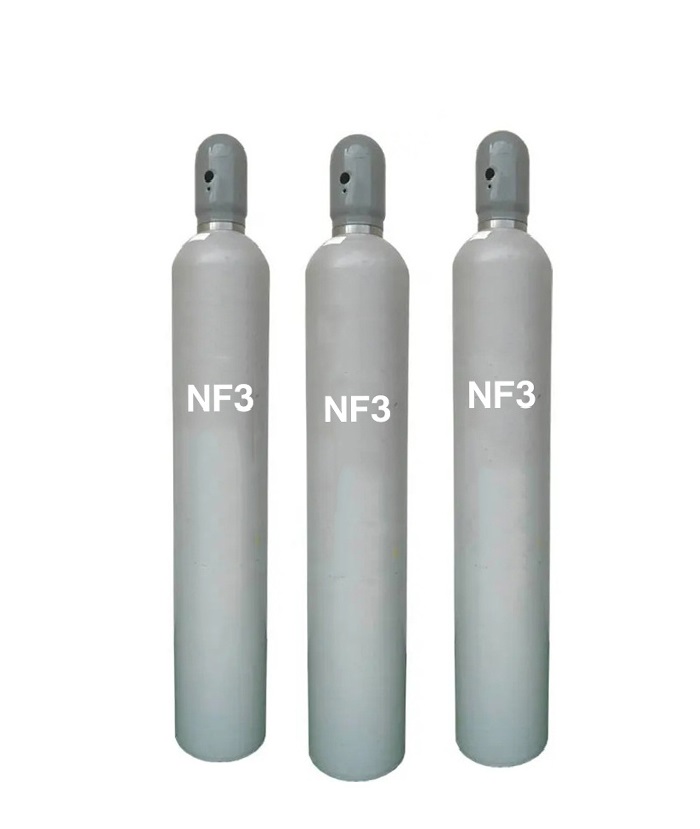
Hexafluoroethane (C₂F₆): Industrial Applications, Properties, Safety and Future Trends 2026 2026: 99.999% Electronic Grade for Semiconductor Etching & CVD Cleaning") Nitrogen Trifluoride (NF₃) 2026: 99.999% Electronic Grade for Semiconductor Etching & CVD CleaningStraight answers on nitrogen trifluoride: 99.999% electronic-grade NF3 for semiconductor plasma etching, CVD chamber cleaning, and display manufacturing. UN2451 shipping, cylinder specs, and compliance requirements. Request a quote.
Nitrogen Trifluoride (NF₃) 2026: 99.999% Electronic Grade for Semiconductor Etching & CVD CleaningStraight answers on nitrogen trifluoride: 99.999% electronic-grade NF3 for semiconductor plasma etching, CVD chamber cleaning, and display manufacturing. UN2451 shipping, cylinder specs, and compliance requirements. Request a quote. Successful Conclusion of CPHI China 2026 | Zibo Dijia Gains Global Recognition for High-Purity Specialty Gas SolutionsThe 24th CPHI China 2026 concluded successfully in Shanghai. As a leading specialty gas supplier, Zibo Dijia showcased ten series of high-purity industrial, electronic, medical and specialty gases at Booth W4A76, including core products like hydrogen chloride and sulfur hexafluoride. The three-day exhibition facilitated in-depth negotiations with global pharmaceutical clients, yielding abundant cooperation intentions. Dijia’s professional gas solutions and reliable supply capacity won wide overseas recognition, laying a solid foundation for further global market expansion.
 Zibo Dijia Maintains Strong Momentum on Day 2 of the 24th CPHI China, Empowering Pharmaceutical Industry with Specialty GasesDay 2 @ CPHI China | Booth W4A76, Zibo Dijia Special Gas
Visitor momentum continues with targeted industrial negotiations. We supply mainstream pharmaceutical specialty gases including hydrogen chloride, hydrogen sulfide and sulfur hexafluoride. With ten product series and over 100 gas types covering industrial, electronic, medical, laser and calibration applications, we focused on high-purity compliance, cross-border supply and customized mixed gas cooperation on Day 2. Only one day left, looking forward to your visit. Electronic Grade Hydrogen Chloride: Properties, Applications, and Significance
: Three Key Questions for Semiconductor & Chemical Buyers") Boron Trifluoride (BF₃): Three Key Questions for Semiconductor & Chemical BuyersStraight answers about 99.9% and 99.999% BF₃ from a manufacturer—what it is, where it's used, and how to ship it.
Boron Trifluoride (BF₃): Three Key Questions for Semiconductor & Chemical BuyersStraight answers about 99.9% and 99.999% BF₃ from a manufacturer—what it is, where it's used, and how to ship it.

Chat Online